Subcision RF
an advanced procedure combining mechanical subcision with radiofrequency energy. It releases fibrotic bands that cause depressed scars while stimulating collagen. The RF energy tightens skin and improves texture. This treatment is especially effective for deep acne scars. Results improve significantly over sessions.
- Deep acne scars
- Rolling scars
- Depressed scars
- Uneven skin texture
- Scar remodeling
- Releases scar tethering
- Boosts collagen formation
- Improves scar depth
- Enhances skin smoothness
- Long-lasting improvement
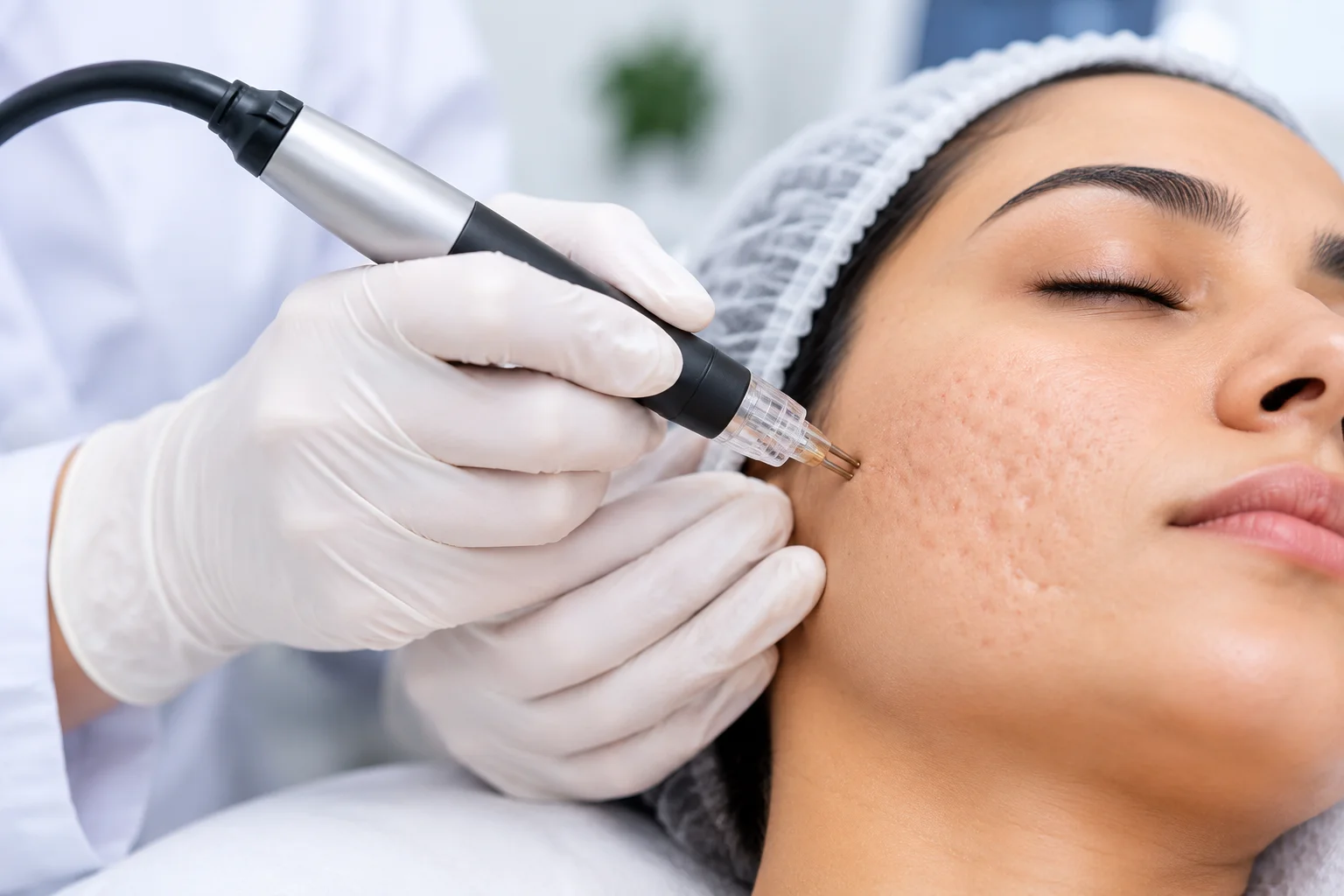
“Deep Scars Need a Deeper Strategy – RF Subcision.”
What Is RF Subcision?
RF Subcision is an advanced dermatological treatment designed to improve the appearance of depressed acne scars, uneven skin texture, and scar-related irregularities. It combines the technique of subcision, which releases fibrous bands pulling the skin downward, with radiofrequency (RF) energy to support collagen remodeling and improve overall skin texture.
Deep acne scars, particularly rolling scars, can develop when fibrous tissue beneath the skin pulls the surface inward, creating visible depressions. Topical skincare products alone may not be sufficient to address these deeper structural concerns. RF Subcision targets the underlying scar tissue to help release this tethering and encourage a smoother-looking skin surface.
During the procedure, a qualified dermatologist uses an appropriate subcision technique to release the fibrous bands responsible for depressed scars. Radiofrequency energy may then be used to deliver controlled heat into the targeted tissue, supporting collagen production and skin remodeling. The combination aims to improve scar depth, skin texture, and the appearance of acne-related depressions over time.
RF Subcision is particularly useful for selected cases of deep, tethered acne scars. The treatment approach depends on the type, depth, and severity of the scars, as well as the individual's skin condition. Multiple sessions may be recommended to achieve progressive improvement, and results vary from person to person.
Best For
Deep Acne Scars: Helps address depressed scars caused by underlying fibrous tissue.
Rolling Scars: Targets tethered scars that create an uneven, wave-like skin surface.
Depressed Scars: Helps release the bands pulling the skin inward.
Uneven Skin Texture: Supports gradual improvement in the appearance of scarred skin.
Atrophic Acne Scars: May help improve selected scars that appear sunken or indented.
Scar Remodeling: Encourages gradual tissue repair and collagen remodeling.
Persistent Acne Scarring: An option for people seeking professional treatment for scars that remain after active acne has settled.
Key Benefits
Releases Scar Tethering: Helps loosen fibrous bands responsible for pulling the skin downward.
Stimulates Collagen Formation: Radiofrequency energy supports the skin's natural collagen-remodeling process.
Improves Scar Depth: May reduce the appearance of selected depressed and rolling acne scars.
Refines Skin Texture: Supports a smoother-looking and more even skin surface over time.
Targets Deeper Skin Concerns: Addresses structural scarring beneath the skin rather than focusing only on the surface.
Supports Long-Term Improvement: Collagen remodeling occurs gradually, with results developing over time.
Personalised Treatment: The procedure can be planned according to scar type, depth, and individual skin needs.
Why Choose RF Subcision for Acne Scars?
Acne scars can vary significantly in shape, depth, and structure. Treatments that work well for one scar type may not be equally effective for another. RF Subcision is particularly considered when depressed scars are tethered by fibrous bands beneath the skin.
By combining scar release with radiofrequency-assisted tissue remodeling, this approach aims to address both the underlying tethering and the skin's healing response. A dermatologist can assess your scars and determine whether RF Subcision alone or a combination of treatments would be more suitable for your skin.
Depending on your individual concerns, additional procedures may sometimes be recommended as part of a comprehensive acne scar treatment plan.
What to Expect During Treatment
The treatment begins with a consultation to evaluate your acne scars, skin type, medical history, and suitability for the procedure. The treatment area is prepared, and appropriate numbing measures are generally used to improve comfort.
The dermatologist then performs the selected subcision and radiofrequency procedure according to your treatment plan. Temporary redness, swelling, tenderness, bruising, or other short-term skin reactions may occur. Recovery time varies depending on the technique used and the extent of treatment.
As the skin heals and collagen remodeling progresses, improvements may become noticeable over several weeks to months. Multiple sessions may be needed, depending on the severity of the scars and the response to treatment. Following the prescribed aftercare instructions is important for supporting healing and reducing the risk of complications.
Treatment Price
Starts From: ₹11,999/-*
Take a step towards smoother-looking skin with a personalised acne scar treatment plan.
Book Your Consultation Today!
Note: The starting price is indicative and may vary depending on the treatment area, scar severity, technique used, and number of sessions required. A dermatologist consultation is necessary to assess suitability and confirm the treatment plan.